Magnesium: The Calming Mineral Every Perimenopausal Woman Needs

Magnesium: The Calming Mineral Every Perimenopausal Woman Needs
You're lying awake at 11pm, your mind spinning with tomorrow's to-do list.
Your shoulders are tensed up to your ears. Your jaw is clenched. Your muscles ache. Your legs feel restless.
You're exhausted, but you can't seem to settle your nervous system.
And the next day, you're irritable and scattered, reaching for another cup of coffee to get through, which makes sleep harder that night.
Here's what I know: you're likely magnesium deficient. And if you're in perimenopause, this deficiency is making everything harder.
Magnesium is the mineral that tells your nervous system it's safe to rest. It's the relaxation switch. And in perimenopause — when stress is high, sleep is disrupted, and your blood sugar is dysregulated — you need more of it than ever.
Why You're Deficient (And Why It Matters in Perimenopause)
Most women are magnesium deficient. Studies suggest that 48-57% of Americans don't get enough through food alone.
But in perimenopause, the problem is worse. Here's why:
Stress depletes magnesium. Cortisol (your stress hormone) uses up your magnesium stores. In perimenopause, cortisol is already dysregulated. Your nighttime cortisol is high (causing 3am wake-ups). Your daytime cortisol is often low (causing afternoon crashes). This erratic cortisol pattern burns through magnesium.
Caffeine depletes magnesium. Many perimenopausal women increase caffeine to compensate for fatigue. Caffeine increases magnesium excretion through urine. The more coffee you drink, the more magnesium you lose — and the more depleted you become.
Alcohol depletes magnesium. Some women turn to alcohol for evening relaxation. Alcohol is a magnesium-depleting diuretic. It also disrupts sleep, which further dysregulates cortisol and magnesium status.
Insulin resistance depletes magnesium. High insulin increases magnesium excretion. Perimenopause brings insulin resistance, so this is a double hit.
Perimenopause inflammation increases magnesium demand. Magnesium is anti-inflammatory. When your body is in an inflammatory state (which perimenopause is), you need more of it to manage the inflammation.
So you're losing magnesium faster AND using it up faster.
The result: a cascading set of symptoms that all trace back to magnesium deficiency.
What Magnesium Actually Does
Once you understand magnesium's role, you see why deficiency feels so bad:
Magnesium increases GABA production. GABA is your brain's primary "rest and digest" neurotransmitter. It tells your nervous system it's safe to relax. Low magnesium means low GABA, which means your nervous system is stuck in sympathetic (stress) mode.
Magnesium supports melatonin production. Melatonin is the sleep hormone. Magnesium is a cofactor for melatonin synthesis. Without adequate magnesium, you can't make enough melatonin, so sleep becomes elusive.
Magnesium regulates blood sugar and insulin sensitivity. Insulin requires magnesium to work properly. Low magnesium worsens insulin resistance, which worsens blood sugar dysregulation, which worsens sleep and mood.
Magnesium relaxes muscles. This is why magnesium deficiency causes muscle tension, aches, restless legs, and jaw clenching. Your muscles literally can't relax without it.
Magnesium lowers cortisol. It helps regulate your HPA axis (hypothalamic-pituitary-adrenal axis), which controls your stress response. Magnesium deficiency leaves your stress response dysregulated, keeping you in a perpetual state of low-grade activation.
Magnesium supports cardiovascular health. It helps regulate blood pressure and heart rhythm. Perimenopause brings cardiovascular changes; magnesium helps you adapt smoothly.
Magnesium supports bone health. This is especially important as estrogen drops. Magnesium is essential for bone mineralization.
When you're deficient, you lose all of these supports simultaneously. Your nervous system is hyper-activated. Your sleep is disrupted. Your blood sugar is dysregulated. Your muscles are tense. Your mood is fragile. Your bones are stressed.
Sound familiar?
Which Form of Magnesium to Take
Not all magnesium supplements are equal. The form matters hugely.
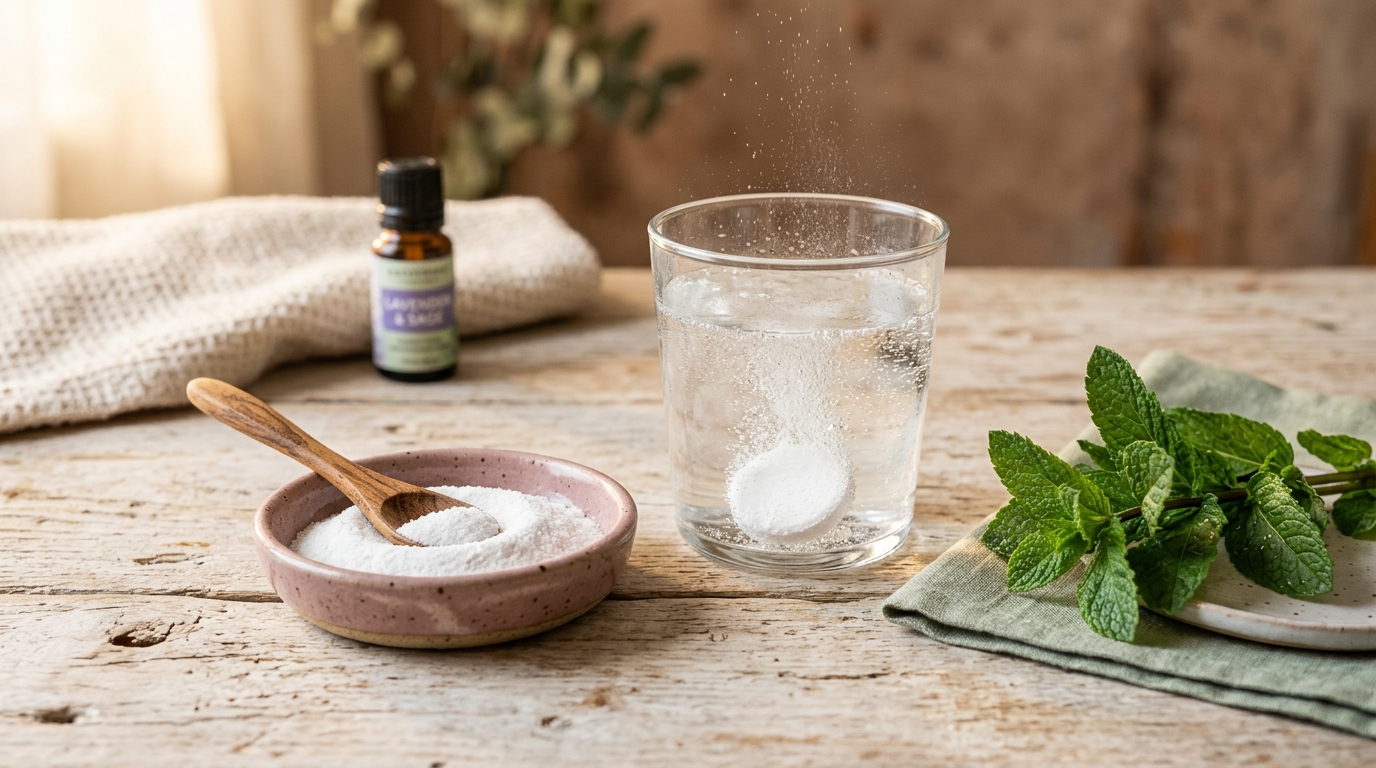
Magnesium Glycinate (or Bisglycinate) — This is the gold standard for sleep and calming. Glycine is itself a calming amino acid (it also supports sleep and relaxation). The combination is deeply soothing. Absorption is excellent. This is what I recommend for most perimenopausal women. Dose: 200-400mg before bed.
Magnesium Citrate — This form is absorbed well and has a mild laxative effect (helpful if constipation is an issue). But it's more stimulating than glycinate, so it's better for daytime use. Not ideal for sleep.
Magnesium Oxide — This is cheap and common, but absorption is poor (40-60% bioavailable). Most of it doesn't actually get absorbed. Skip this one.
Magnesium Malate — Contains malic acid, which may be stimulating for some people. Some women with fibromyalgia find it helpful for energy and muscle pain, but it's not ideal for sleep.
Magnesium L-Threonate — This form crosses the blood-brain barrier well and is particularly supportive for brain health, mood, and memory. It can be helpful for cognitive symptoms of perimenopause, but it's expensive.
Magnesium Taurate — Excellent for heart health and supportive of cardiovascular function during hormonal transition. Good if you're experiencing heart palpitations.
For most perimenopausal women, start with magnesium glycinate, 200-400mg before bed. This addresses sleep, mood, muscle tension, and calming all at once.
How to Take It Effectively
Timing: Take it 30 minutes to 1 hour before bed. This gives it time to start working before your head hits the pillow.
With food or without: Magnesium glycinate can be taken with or without food. Some people find it absorbs better with a small meal.
Consistency: Take it every night. Magnesium builds in your system. You'll likely feel the difference more after 1-2 weeks of consistent use than after a single dose.
Don't mix with other minerals: Calcium, iron, and zinc can compete with magnesium for absorption. If you take other supplements, separate them by 2 hours.
Medication interactions: If you're on medications (especially antibiotics, bisphosphonates for bone health, or certain blood pressure meds), check with your pharmacist. Magnesium can interact with some medications.
What to Expect
After 3-5 days: You may start feeling more relaxed, less jaw-clenchy, less muscle-tense.
After 1-2 weeks: Sleep usually improves. Muscle aches often decrease. Mood becomes more stable.
After 3-4 weeks: The full effect. Deeper sleep. Better stress resilience. Less irritability. More stable energy.
If you're severely depleted, you might need higher doses or longer to see a difference. If you're not seeing improvement after 4 weeks, you might need a different form (try magnesium threonate or taurate).
A Word About Food Sources
Magnesium is in leafy greens, nuts, seeds, and whole grains. But here's the thing: perimenopause usually requires more magnesium than you can get from food alone, especially if you're also losing it through stress and caffeine.
Supplementation is usually necessary. This isn't a failure of your diet — it's a reality of perimenopause.
Magnesium is One Piece of a Bigger Picture
Magnesium is foundational. It's not the whole answer, but it's often the missing piece that makes everything else work better.
When you add magnesium to stabilized blood sugar (through proper macros), good sleep, and the other supports that metabolic repair requires, everything synergizes. Your nervous system settles. Your sleep deepens. Your mood stabilizes. Your body becomes better able to burn fat and build muscle.
You deserve to feel calm. You deserve to sleep. You deserve a nervous system that knows it's safe to rest.
Magnesium can help you get there.
Ready to put all the pieces together? Join our free 5-Day Metabolic Challenge to learn the complete protocol for metabolic repair — nutrition, supplementation, sleep support, and stress management. Understand how all these pieces work together and finally feel like yourself again. Get the free challenge.
Latest Articles
Quick reads for steadier days.