Ashwagandha for Perimenopause: What You Need to Know

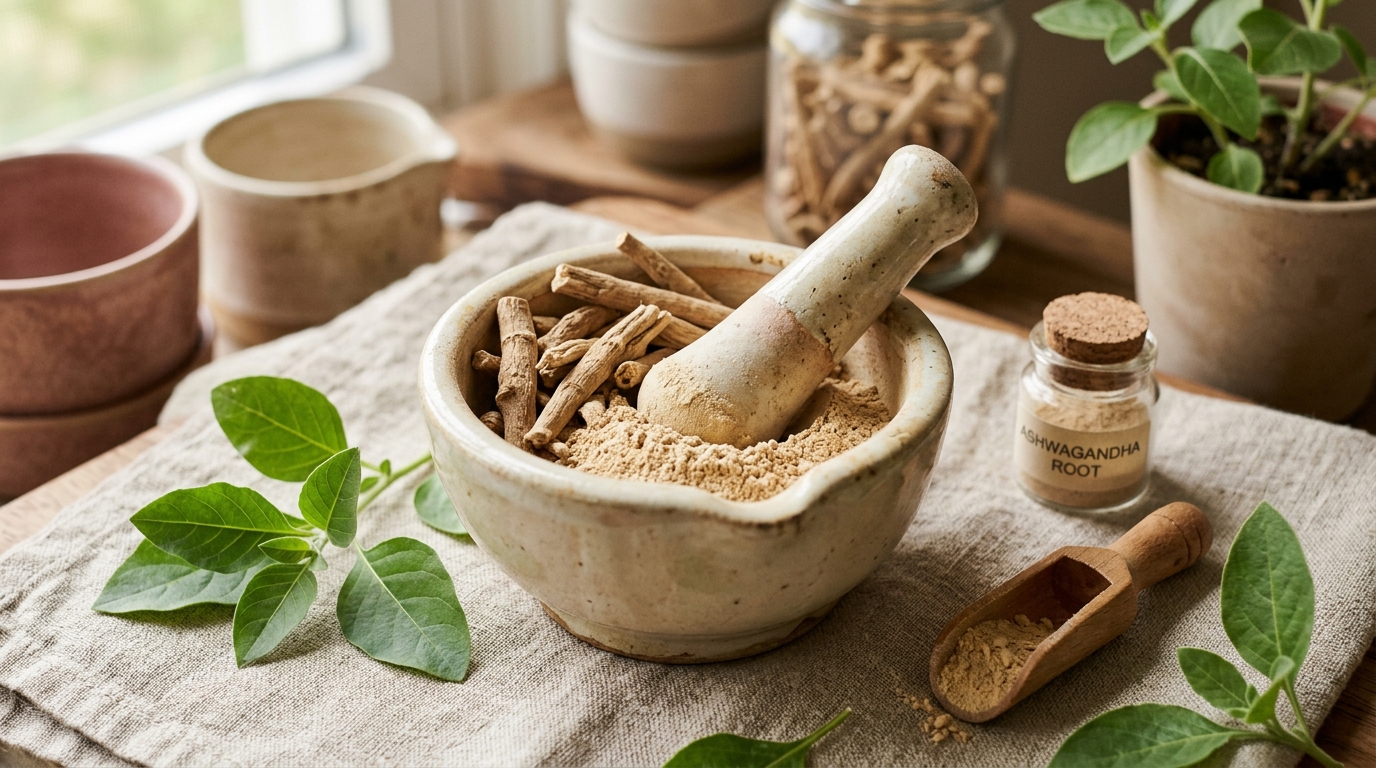
Ashwagandha for Perimenopause: What You Need to Know
You're scrolling through supplement recommendations for perimenopause and ashwagandha keeps appearing. Adaptogen. Stress-relieving. Anxiety-reducing. Helps with sleep.
It sounds promising. But you want to know the actual science. How does it work? What dose matters? Is it safe? And most importantly—will it actually help with the anxiety, sleep disruption, and mood shifts of perimenopause?
The answer is yes, with important caveats. Ashwagandha is one of the most researched adaptogens, and the evidence is solid—but it's not a magic bullet, and it's not appropriate for everyone.
Let's break down what ashwagandha actually does, why it helps perimenopause specifically, and what you need to know before you start taking it.
What Is Ashwagandha and How Does It Work?
Ashwagandha is a plant (botanically, Withania somnifera) used in Ayurvedic medicine for thousands of years. It's classified as an adaptogen—a substance that helps your body adapt to stress and return to balance.
The active compounds in ashwagandha are called withanolides. These are what do the work. When you take ashwagandha, these withanolides interact with your nervous system and endocrine system (your hormonal system).
Specifically, ashwagandha:
-
Blocks cortisol response. Your HPA axis (hypothalamic-pituitary-adrenal axis) is your stress response system. When you perceive stress, your brain signals your adrenals to release cortisol. Ashwagandha dampens this response. Less cortisol release means less stress signaling in your body, even when life is stressful.
-
Increases DHEA and testosterone. These are androgens that tend to decline as you age. Ashwagandha subtly supports their production. This matters for perimenopause because declining androgens contribute to fatigue, low motivation, and low libido.
-
Lowers anxiety and improves mood. Ashwagandha increases GABA signaling (your calming neurotransmitter) and serotonin signaling (your mood neurotransmitter). This creates a calming effect without the sedation of prescription medications.
-
Supports sleep. By lowering cortisol and increasing GABA signaling, ashwagandha makes it easier to fall asleep and improves sleep quality.
-
Reduces inflammation. Chronic stress elevates inflammatory markers. By reducing stress signaling, ashwagandha reduces systemic inflammation.
None of these effects are dramatic. Ashwagandha doesn't sedate you like Ambien or calm you like a benzodiazepine. Instead, it creates a subtle shift toward calm, rest, and nervous system recovery.
Why Ashwagandha Helps Perimenopause Specifically
In perimenopause, multiple things happen simultaneously:
- Progesterone declines. Progesterone is calming and sleep-promoting. As it drops, anxiety and sleep disruption increase.
- Cortisol dysregulation develops. The stress response system becomes less stable, creating higher baseline cortisol and more reactivity to stress.
- Anxiety and mood shifts occur. The combination of declining progesterone and shifting cortisol creates neurochemical instability.
- Sleep disrupts. Night sweats, 3 a.m. wake-ups, and difficulty staying asleep become common.
Ashwagandha addresses several of these simultaneously:
- It provides some of the calming effect that declining progesterone is removing
- It stabilizes cortisol, reducing the anxiety that comes from stress dysregulation
- It supports sleep through multiple mechanisms (lower cortisol, higher GABA, better temperature regulation)
- It may support DHEA production, which supports energy and mood
In other words, ashwagandha doesn't replace declining hormones, but it does help your nervous system adapt to the hormonal shifts that are happening.
The Research on Ashwagandha for Perimenopause
The research on ashwagandha for anxiety and sleep is solid. Multiple clinical trials show:
- Significant reduction in anxiety scores compared to placebo
- Improved sleep onset and sleep quality
- Reduced cortisol levels (measurable in saliva cortisol tests)
- Improved mood and well-being
- No significant side effects in most populations
For perimenopause specifically, research is less abundant but promising. Small studies show ashwagandha helps with hot flashes (probably through cortisol reduction and temperature regulation), anxiety, and sleep quality in menopausal women.
The effect size isn't enormous—ashwagandha isn't going to transform your life if you're severely depressed or not sleeping at all. But for the moderate anxiety, sleep disruption, and stress dysregulation of perimenopause? It's genuinely helpful.
Dosing: What Actually Works
Standard dosage: 250-500 mg daily, typically taken once daily with food
Higher dosage: Some studies use up to 600 mg daily, divided into two or three doses, for more significant anxiety
Timeline to effect: Ashwagandha isn't immediate. You need to take it consistently for 2-4 weeks before you notice significant shifts in anxiety or sleep. Some effects (like cortisol reduction) show up faster (within days), but the mood and sleep benefits take time.
Best practices:
- Start with 250 mg daily (one dose)
- Take it with food (it's fat-soluble, so food helps absorption)
- Be consistent—daily intake matters more than high doses
- Give it 4 weeks before assessing whether it's working
- If taking 250 mg isn't producing an effect after 4 weeks, consider increasing to 500 mg
What to look for in a supplement:
- Standardized extract. Make sure the label says it's standardized to withanolides (the active compounds). Aim for at least 5% withanolides, preferably higher.
- Third-party tested. Look for NSF or USP certification.
- Clean additives. Check the ingredient list for unnecessary fillers or additives.
Brands like Jarrow, NOW, and Gaia are generally well-regarded. Don't buy the cheapest option—quality matters here.
Important Safety Information: Who Should NOT Take Ashwagandha
Ashwagandha is generally very safe, but there are important contraindications:
Do not take ashwagandha if you:
-
Take thyroid medications. This is critical. Ashwagandha can increase thyroid hormone levels. If you're on thyroid replacement (levothyroxine, etc.), ashwagandha might raise your levels too high, creating hyperthyroidism. If you have Hashimoto's or hypothyroidism and want to try ashwagandha, work with your doctor and have your thyroid levels monitored.
-
Are pregnant or breastfeeding. Not enough research exists on safety in pregnancy. Avoid it.
-
Are scheduled for surgery. Ashwagandha can have mild blood-thinning properties and might interact with anesthesia. Stop it at least 2 weeks before surgery.
-
Take immunosuppressive medications. Ashwagandha is immune-stimulating. If you're on medications that suppress your immune system (for autoimmune conditions, transplant rejection prevention, etc.), ashwagandha might counteract them.
-
Have an autoimmune condition. Because ashwagandha stimulates immune response, it can theoretically worsen autoimmune conditions. If you have Hashimoto's, lupus, rheumatoid arthritis, or similar, talk to your doctor first.
-
Take sedative medications. Ashwagandha has calming effects. Combined with sedatives, it could create excessive drowsiness.
Have a conversation with your healthcare provider before starting if you have any chronic health conditions or take any medications. Ashwagandha is safe, but these interactions matter.
Ashwagandha vs. Other Calming Supplements
How does ashwagandha compare to other options for anxiety and sleep in perimenopause?
vs. Magnesium glycinate (200-400 mg daily): - Magnesium is faster-acting, works primarily by supporting nervous system function - Ashwagandha is slower but addresses cortisol directly - Many women combine them (magnesium in evening, ashwagandha in morning or evening) - Both are safe long-term
vs. Valerian root (400-600 mg daily): - Valerian is more sleep-specific; ashwagandha is broader (anxiety, mood, sleep) - Valerian works faster; ashwagandha takes 2-4 weeks - Valerian can taste/smell strong; ashwagandha doesn't - No known interactions between them; some people take both
vs. L-theanine (100-200 mg): - L-theanine is faster-acting (within minutes); ashwagandha takes weeks - L-theanine is more specific to acute anxiety; ashwagandha addresses systemic stress - L-theanine can be taken as-needed; ashwagandha works best daily - They work differently enough that some people use both
vs. HRT (hormone replacement therapy): - Ashwagandha addresses nervous system and cortisol; HRT addresses hormonal deficit directly - HRT is more powerful if declining estrogen/progesterone is your primary issue - Ashwagandha is a good option if you prefer not to use HRT or want to support HRT with additional tools - Many women do both
Setting Realistic Expectations
Ashwagandha will probably help, but here's what it won't do:
- It won't eliminate anxiety completely. It reduces it, making it more manageable.
- It won't replace sleep medications if you have severe insomnia. It helps with mild-to-moderate sleep disruption.
- It won't fix everything if your diet and stress are still chaotic. It works best alongside other metabolic and lifestyle support.
- It won't work for everyone. Some people respond beautifully; others notice minimal effect. This is normal with botanical supplements.
What it will likely do:
- Reduce baseline anxiety level
- Make it easier to fall asleep and stay asleep
- Improve mood slightly and make stress feel less overwhelming
- Support your nervous system during the perimenopause transition
- Provide a safe, long-term option for calming without addiction or significant side effects
The Bigger Picture: Ashwagandha as One Tool
Ashwagandha is helpful, but it's not a substitute for addressing the metabolic foundation of perimenopause.
When you also:
- Lower insulin (through dietary changes like the restorative keto approach)
- Stabilize blood sugar (which reduces cortisol spikes)
- Support sleep (through electrolytes, magnesium, and consistent routine)
- Manage stress (through movement, breathing, rest)
Then ashwagandha becomes part of a system that actually works. It's like adding a calming layer to a metabolically stable foundation.
Ashwagandha alone, in the context of blood sugar chaos and high insulin, will help—but not as much as ashwagandha plus metabolic repair.
Getting Started Safely
If you decide ashwagandha is right for you:
- Talk to your doctor if you have any health conditions or take medications (especially thyroid meds)
- Buy a quality standardized extract (at least 5% withanolides)
- Start with 250 mg daily with food
- Be consistent for 4 weeks before assessing
- Track what changes: sleep, anxiety, mood, energy
- Consider combining it with other tools (magnesium, sleep routine, dietary changes) for better results
Ashwagandha isn't a magic bullet, but it's a solid, evidence-based tool for addressing the anxiety, stress, and sleep disruption of perimenopause. Combined with metabolic repair and lifestyle support, it can be genuinely transformative.
Ashwagandha addresses the nervous system, but true metabolic transformation happens when you also address insulin and blood sugar. Our free 5-Day Metabolic Challenge shows you how to build a foundation of stable blood sugar and low cortisol—creating an environment where supplements like ashwagandha work better, where sleep improves more deeply, and where anxiety naturally decreases.
You don't have to choose between supplements and dietary changes. They work beautifully together. Start with the metabolic foundation. Add the tools that support it.
Latest Articles
Quick reads for steadier days.