5 High-Fat Snacks That Won't Spike Your Insulin

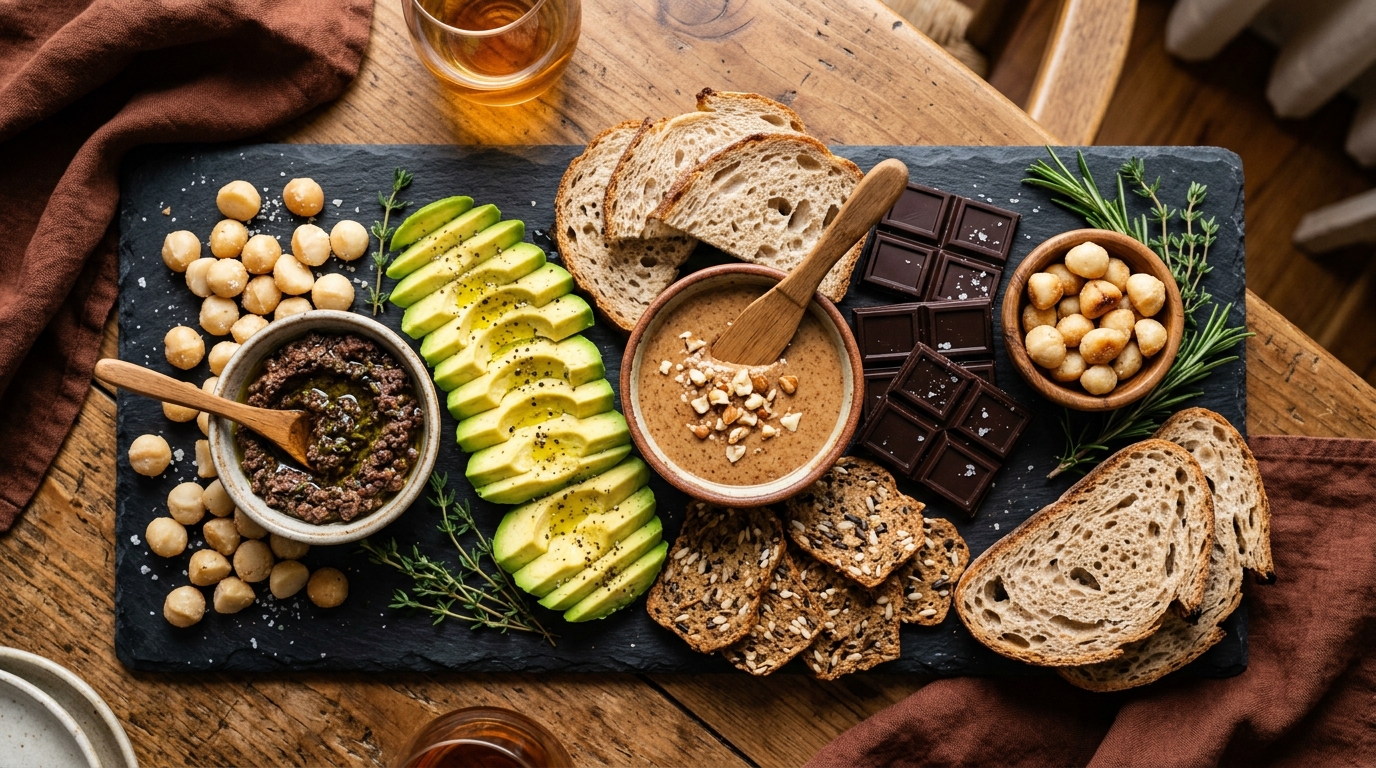
5 High-Fat Snacks That Won't Spike Your Insulin
You're doing the hard work. You've cleaned up breakfast, lunch, and dinner. Your meals are hitting the 70/20/10 ratio, blood sugar is steadier, and you can feel the shift. Then 3 p.m. rolls around, hunger kicks in, and suddenly you're reaching for crackers because you think a "snack" has to be carbohydrate-based.
Here's the truth: that narrative is wrong. And it's costing you metabolic control.
Between-meal eating is where most women's insulin resistance either gets repaired or gets reinforced. A well-chosen snack keeps your insulin low, extends fat-burning, and brings you to dinner without blood sugar chaos. A reactive snack (chips, granola bars, fruit juice) spikes insulin right back up and sends you back to the store-fat cycle.
The good news? Your snack options are delicious, satisfying, and scientifically sound. Let me walk you through five metabolic snacks that work.
Why Snacks Matter for Insulin Control
When you eat a carb-heavy snack, your pancreas releases insulin to shuttle glucose into cells. That insulin signal tells your body: Store fat. Don't burn it. Even if the snack is "healthy" (whole grain, low sugar), carbohydrates trigger that cascade.
Fat and protein, by contrast, trigger minimal insulin response. They satisfy hunger longer. They signal satiety to the brain. They don't interrupt the metabolic repair you've built during your meals.
This isn't about willpower. It's about biochemistry. The right snack keeps your insulin flat—which means your fat-burning window stays open.
The 5 High-Fat Snacks That Work
1. Macadamia Nuts: The Gold Standard
Macadamia nuts are metabolically perfect: 75% fat, 5% carbs, and deeply satisfying. A small handful (about 1 oz) delivers creamy richness and keeps you full until dinner.
Why they work: Macadamias have the lowest carb density of any nut. They're rich in monounsaturated fat—the same fat that made olive oil famous. No guilt spiral, no insulin spike, just fuel.
How to use it: Portion into small bowls or grab a small handful. Pair with herbal tea for a ritual without the snack-train mentality.
2. Half an Avocado with Celtic Sea Salt
Half an avocado is roughly 12g fat, 1g net carb, 1g protein. Sprinkle with sea salt and you've got a snack that tastes indulgent and metabolically transparent.
Why it works: Avocado is nutrient-dense—folate, potassium, vitamin K. The fat is satiating. The salt isn't "bad"; it's essential electrolyte support. Many perimenopausal women are chronically salt-depleted, which worsens fatigue and food cravings.
How to use it: Cut in half, remove the pit, add salt, eat with a spoon. Takes 60 seconds. Perfect for mid-afternoon or post-workout.
3. Olives: The Simplest Solution
A small bowl of olives (about 10-12) is ~10g fat, 0g net carbs, and requires zero prep. They're fermented—good for gut health—and come in infinite flavors.
Why they work: Olives trigger no metabolic stress. They're satisfying. They're literally a food you can eat and forget about, which is the goal of a good snack.
How to use it: Buy a quality jar, portion into small containers, keep one at your desk or in your bag. Grab when hunger arrives.
4. Cheese with Cucumber Slices
1 oz of aged cheddar or gouda (roughly a small handful) plus a cup of cucumber slices: ~9g fat, 1g net carb, 7g protein. Crisp, cool, and satisfying.
Why it works: The protein-fat combination signals satiety quickly. Cucumber is hydrating and low-stress. The combination gives you texture variety—soft and crisp—which makes the snack feel more complete.
How to use it: Cut cucumber, portion cheese, eat. This travels well and works in any setting.
5. Dark Chocolate Fat Bombs or 85%+ Dark Chocolate
A small square of 85%+ dark chocolate (or a homemade fat bomb: cocoa powder + coconut oil + allulose) delivers ~5-10g fat, 2-3g net carbs, and a satisfying chocolate moment.
Why it works: 85%+ chocolate has minimal sugar. The cocoa is rich in polyphenols (antioxidant). The fat slows any glucose absorption. It satisfies the urge for "something sweet" without the insulin dump.
How to use it: Buy a high-quality bar, eat one square slowly. Or make fat bombs (cocoa + coconut oil + sea salt + allulose) and freeze them.
The Biochemistry Behind the Snack
Each of these snacks works because they follow the same principle: high fat, minimal carbs, adequate protein when included, and real food.
Your body has two fuel states: - High insulin = store fat, don't burn it - Low insulin = burn fat, access energy stores
A macadamia nut or avocado keeps insulin low. Your metabolic signal stays clean. Your fat cells stay unlocked. You arrive at dinner not ravenous, which means you eat with intention instead of urgency.
This is why snack choice matters more than snack frequency. One well-chosen snack supports your repair. One reactive snack undoes an hour of metabolic work.
What Not to Do
The trap is thinking snacks need to be "light" or "diet." They don't. They need to be metabolically aligned. That means:
- Skip the granola bars, even "keto" ones (often 5-8g net carbs per bar)
- Skip fruit (too much glucose, too much fructose)
- Skip crackers, bread, or anything flour-based
- Skip yogurt (even plain, it's 4-5g carbs per serving)
- Skip protein bars marketed as "energy" (usually sugar in disguise)
These snacks look innocent. They feel lighter. And they'll reset your insulin every single time.
One Meal Won't Undo Your Repair
I want to name something important: if you eat a reactive snack, you don't spiral. One snack doesn't erase your work. Your metabolic repair is more resilient than that. You notice the shift (you might feel less focused, more hungry at dinner), you return to your signal, and you keep going.
This is not about perfection. It's about choosing snacks that support the work you're doing, not snacks that fight against it.
Your Next Step
Start by choosing one of these snacks to keep on hand this week. Build the habit. Notice how you feel—energy, hunger, focus—when you choose a high-fat snack versus a carb-based one.
Your body will teach you. The metabolic signal becomes clearer when you're consistent.
If you're new to this approach and want a complete framework for eating through perimenopause—meal structure, macro balance, and the science behind why your metabolism works the way it does—I invite you to join the free 5-Day Metabolic Challenge. You'll get daily metabolic lessons, meal examples, and the tools to start your repair.
[Join the Free 5-Day Metabolic Challenge]
Your snacks don't have to fight your goals. They can support them.
Latest Articles
Quick reads for steadier days.